


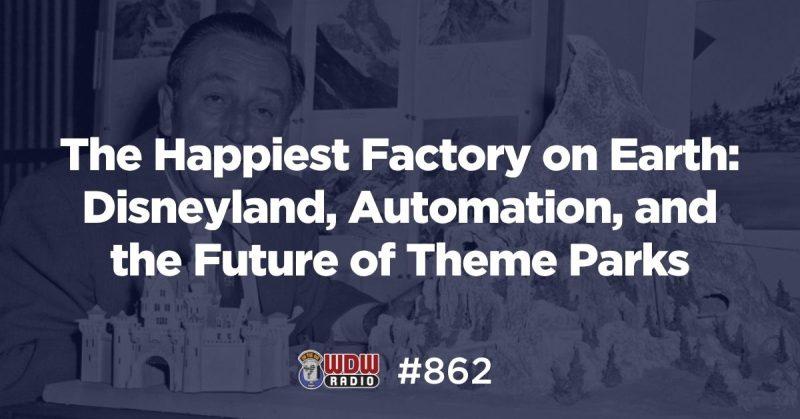
What If the Magic of Disneyland Is Actually the Machinery?
Disneyland and the Rise of Automation is more than a fascinating idea – it is a powerful new way to understand not just how Disneyland works, but why it still feels so magical decades later.
What if the wonder of Disneyland is not only in its stories, characters, and nostalgia, but in the systems underneath it all? What if the real magic is also in the ride vehicles, the sensors, the timing, the audio, the movement, the feedback loops, and the invisible engineering that most of us pass by without ever noticing?
In this week’s episode, I sit down with Dr. Roland Betancourt, Chancellor’s Professor of Art History at UC Irvine, Guggenheim Fellow, and author of Disneyland and the Rise of Automation: How Technology Created the Happiest Place on Earth. And this conversation truly changes the way we see the park.
Because once you start hearing Disneyland as much as seeing it, everything shifts.
The clack of the Tiki Room birds.
The hum and braking of the Matterhorn.
The choreography of dark rides.
Even the conveyor-belt journey of a churro.
This episode is about the hidden systems that shape the guest experience, and why understanding them does not ruin the magic. It deepens it.
Episode Snapshot
- Disneyland can be understood as a carefully designed system of automation, not just themed entertainment.
- Walt Disney’s 1948 visit to the Ford River Rouge plant helped shape how Disneyland would function mechanically as well as visually.
- Attractions like Peter Pan’s Flight, the Matterhorn, and the Enchanted Tiki Room reveal how industrial and military technologies were reimagined as guest experiences.
- Audio-animatronics did more than entertain – they changed how guests emotionally responded to machines.
- This history feels even more relevant today as Disney and the rest of the world move deeper into AI and interactive technology.
What You Will Discover in This Episode
- Why a Disneyland churro may be one of the best metaphors for understanding the entire park
- How factory tours and industrial systems helped inspire Disneyland
- Why the Matterhorn matters far beyond thrill rides
- What audio-animatronics teach us about realism, emotion, and technology
- How Disneyland may have helped generations of guests become more comfortable with automation
- Why this conversation feels incredibly timely in an age of AI
Timestamps
- 00:05 – A new way to see Disneyland through automation and engineering
- 02:58 – Why the book opens with a churro
- 03:56 – The churro conveyor belt as a metaphor for Disneyland itself
- 05:20 – Reframing Disneyland as a showcase of automation
- 14:30 – Guests as participants inside the system, not just observers
- 16:48 – Walt Disney, Ward Kimball, and the 1948 Ford River Rouge visit
- 17:24 – Why River Rouge was so foundational to Disneyland
- 31:09 – The Matterhorn and the evolution of block systems and ride safety
- 34:25 – Audio-animatronics, labor, and why this history matters now
- 35:58 – Abraham Lincoln, realism, and the tension between humans and machines
- 44:44 – The moment animatronics cross into lifelike emotion
- 47:22 – The new Walt animatronic and the next generation of movement
- 1:07:07 – Why this changes how you experience the park forever
Full Episode Summary
This conversation begins with one of the most unexpected entry points into Disney history – a churro.
Not just because it is fun, familiar, and undeniably Disneyland, but because, as Dr. Roland Betancourt explains, that churro reveals something essential about the park. Watching it move through a conveyor system becomes a miniature version of Disneyland’s larger logic: a world where automation, control, timing, and guest experience all work together in ways that feel seamless, almost invisible, and yet deeply emotional.
From there, the discussion opens up into something much bigger. Disneyland is not just a place of themed storytelling. It is also, in Betancourt’s view, one of the most culturally important public spaces where people experience the aesthetics of automation firsthand. Attractions are not merely rides. They are systems. They move guests along tracks, trigger sensors, time effects, and create an experience that is both engineered and emotional at once.
What makes this episode so compelling is that it never treats the technical side of Disney as cold or clinical. Quite the opposite. It reveals how the technology itself becomes part of the storytelling. The machinery is not separate from the magic. It is the magic.
That idea becomes especially powerful when the conversation turns to Walt Disney’s 1948 visit to the Ford River Rouge plant with animator Ward Kimball. Betancourt argues that the trip has long been recognized as important, but usually for its influence on theming. His point is deeper. Walt was not only inspired by immersive environments. He was inspired by the mechanics, logistics, systems, and sheer spectacle of industrial process. The factory itself was being toured like an attraction, and the awe of what machines could do became part of Disneyland’s DNA.
The conversation also explores how Disney attractions changed the guest’s role. In early dark rides, you were not simply watching the story from a distance. In some cases, you were effectively placed into it. That may seem obvious to us now, but at the time it was a meaningful break from the cinematic point of view. Disney was not just showing you a story. The attraction system itself was transforming your role inside it.
And then there is the Matterhorn.
The Matterhorn becomes one of the richest examples in the episode because it represents both innovation and evolution. It was groundbreaking in its early form, but what is even more revealing is how its control systems were refined over time. Betancourt explains how the attraction’s block systems, sensors, and later computerization became part of the broader standard for ride safety and moving vehicle regulation. In other words, the Matterhorn is not just an icon of Disneyland. It is a case study in how Disney engineering matured across decades.
The audio-animatronics section may be the most emotionally resonant part of the conversation.
Because this is where the history of automation stops being abstract and starts feeling personal.
Betancourt explains that magnetic tape systems could record skilled motion and play it back, a concept with deep roots in industrial automation. Disney and its collaborators adapted these ideas into performance systems, creating figures that could move and speak with uncanny lifelikeness. And from the very beginning, there was tension. It was one thing to animate birds. It was another to animate a human figure like Abraham Lincoln. That emotional boundary mattered then, and it still matters now.
That is what makes the final part of the discussion feel so timely. The episode connects early audio-animatronics to today’s conversations about AI, digital humans, interactivity, and the growing emotional realism of machine performance. Without becoming alarmist, it asks an important question: if Disneyland helped earlier generations feel comfortable with automation by making it entertaining, wonder-filled, and emotionally resonant, what role might Disney and themed entertainment play in shaping how we respond to AI now?
That is not just a great Disney question.
It is a great human question.
It Starts With a Churro
Bettencourt’s book opens – brilliantly – with a churro. Not as a food item, but as a philosophical anchor. Standing in a Disneyland queue years before the book even had a shape, he found himself watching the way a churro moves through its little conveyor belt oven and thought: this is a metaphor for everything.
“When you get on a ride,” Bettencourt explained, “you’re sort of getting the POV video of how things are made.” The park, at its core, is an experience of production. You are not just a guest. You are moving through a system.
It’s a provocative idea – and an accurate one. Bettencourt’s thesis reframes Disneyland not simply as a place of storytelling and magic, but as a living, breathing showcase of industrial automation that has been hiding in plain sight since Opening Day, 1955.
Walt, Ford, and the Factory That Changed Everything
Long before Disneyland existed, Walt Disney and animator Ward Kimball made a trip in 1948 that would quietly shape the future of theme parks forever. They visited the Ford River Rouge plant in Dearborn, Michigan – one of the most advanced industrial facilities in the world, and a place that had been offering public tours since the 1930s.
Those tours featured glass-ceiling tour vans, guided walks past blast furnaces, handrails built for spectators near active machinery. The factory, in other words, was already operating a little like a theme park. And Walt noticed.
“We always tend to overstress the theming,” Bettencourt said, “rather than the mechanics that eventually made it happen.” Walt came home from that trip and drafted one of the earliest written plans for what Disneyland could become.
The connection between industrial automation and Disney parks only deepened from there. When Walt and the early Imagineers were developing the World’s Fair attractions in the 1960s, they made reconnaissance trips to Ford plants looking for inspiration. Walt saw massive molten ingots being moved by industrial conveyor and said, essentially: can you make that into a ride?
The Magic Skyway was born.
Magnetic Tape, Ballistic Missiles, and the Enchanted Tiki Room
Here’s where things get genuinely wild.
The magnetic tape technology used to animate the birds in the Enchanted Tiki Room – that clacking, fluid, impossibly precise movement – was the same fundamental technology being used by the U.S. military to test Polaris ballistic missiles. Originally developed in Germany during World War II, it was later adapted by 3M for sound recording, then used to automate factory floors, and then acquired from government contractors by Disney.
“It wasn’t necessarily being bought by the government,” Bettencourt clarified. “It was being bought by one of the government contractors that was trying to figure out, hey, the government contracts are drying up. Where do we diversify?”
Disney became that diversification. And sitting inside what appears to be a tropical hut in the middle of what used to be Orange Groves in Anaheim is technology that once helped guide nuclear weapons.
This is not a coincidence of history. It is the story of how American industrial technology finds its way into American entertainment – and how Disneyland became one of the most significant nodes in that transfer.
Disneyland as Factory, Guests as Product
Bettencourt makes a bold claim in the book – one he knows will give Disney fans pause: Disneyland is, at its core, a kind of factory. And the guests? The raw materials being processed on the assembly line.
He’s quick to point out that this language isn’t alien to the industry. Other amusement park operators historically referred to their parks as “the plant.” Walt Disney himself used the same language about his studio. The idea of an entertainment facility as a production system was, in his era, unremarkable.
But Bettencourt uses the metaphor to unlock something deeper: what the assembly line metaphor actually does for us as guests.
Think about the original dark rides at Disneyland. When they opened, none of the main characters appeared in them – because the design intention was that you were Snow White. You were Peter Pan. You were being moved through the story not as an audience member watching a film, but as the main character being processed through an experience.
“The machines are doing the cosplay for you,” he said. That line has stayed with me.
The Matterhorn: A Master Class in 70 Years of Innovation
If any single attraction encapsulates the full arc of Disneyland’s technological evolution, it’s the Matterhorn. And Bettencourt would agree – he calls it the ride that taught him everything he knows about Disneyland.
The Matterhorn introduced the tubular steel track that enabled the sinuous, complex curves we now take for granted on modern coasters. More significantly, it introduced the block zone system – a safety architecture developed by a largely unknown figure named Robert Gilman – that became the gold standard for roller coaster safety worldwide.
The ride was later refurbished with electronic controller systems, moving from complex relay racks of wiring to programmable computers, and eventually to the kind of digital safety infrastructure that governs virtually every moving ride vehicle in the world today.
“The Matterhorn is this really wonderful case where you see the history of Disney rides in a nutshell,” Bettencourt said.
Animatronics, AI, and the Tension That Never Goes Away
One of the most resonant threads in our conversation is the one that connects the first audio animatronics of the early 1960s to the AI-driven park experiences being developed right now.
When the Lincoln animatronic debuted, it reportedly chilled journalists to the bone. Sculptor Blaine Gibson had hesitated over the project – it was one thing to animate birds, but a human being? Walt convinced him with a simple argument: nobody can play Abraham Lincoln.
At the same time, Life Magazine’s coverage of Pirates of the Caribbean’s opening basically led with a warning that Hollywood unions were going to have a problem with this. The anxiety was real. And as Bettencourt noted, it never went away. CGI replacing practical effects workers. AI actors like Tilly Norwood being pitched to talent agencies while SAG-AFTRA proposes an AI tax. The names change. The tension doesn’t.
“Entertainment takes technology that can be very scary,” he said, “and makes us comfortable with it because it is entertainment.”
That’s what Disney has always done. And it’s what they’ll continue to do as AI companions, LLM-driven characters, and the next generation of interactive animatronics make their way into the parks.
How to Experience the Parks Differently Starting Today
Before we wrapped up, I asked Bettencourt the question I always want to ask someone who sees the parks at this depth: where do you go, and what do you tell people to pay attention to?
His answer was beautiful.
Listen before you look. Record soundscapes. Let the land-themed music, the crowd buzz, the mechanical sounds layer together. Stop taking pictures for ten minutes and just hear where you are.
Ignore the theming on a ride you know well. You’ve been on the Matterhorn dozens of times. This time, look at the track. Watch for the straight sections – those are block zones. Look for the sensors at the entry and exit of each zone. You’re reading the safety language of the attraction.
Find the spot across from the submarine lagoon at Disneyland. Press your hand against the Matterhorn. Feel it shudder every time a car passes overhead. No fence. No line. Just you and the machine, operating.
“Just look where you’re not supposed to be looking,” he said. “That’s where these stories tend to reveal themselves.”
The Book, The Legacy, and the Love Letter
Disneyland and the Rise of Automation: How Technology Created the Happiest Place on Earth is, in Bettencourt’s own words, a love letter to the Imagineers and engineers whose work rarely gets the credit it deserves in the popular telling of Disney history.
It is also, unexpectedly, one of the most relevant books you can read in 2026 – a moment when we are living through our own automation wave, grappling with our own questions about what machines will do, what workers will lose, and what we’ll gain.
Disneyland has been here before. It has answers – or at least a mirror.
I highly recommend this book whether you are a Disney enthusiast, a history lover, a technologist, or simply someone who wants to understand why you feel what you feel the next time you sit in the Tiki Room and hear those birds clacking in the background.
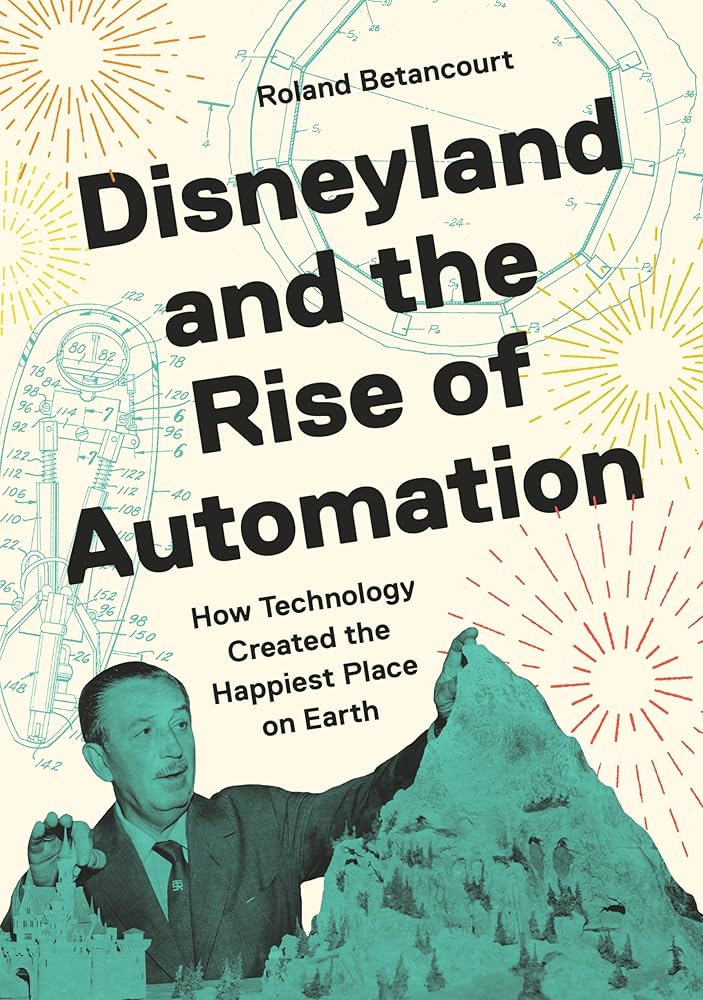
Get the book here: https://amzn.to/4dwr32n
Links and Resources
- 💙 Join the Clubhouse: WDWRadio.com/Clubhouse
- 📰 Get the Newsletter + Free Gift: WDWRadio.com/Newsletter
- 🎟️ Plan Your Trip: MouseFanTravel.com
- 📞 Leave a Voicemail: 407-900-9391
- 📱 Follow Lou on Social: @LouMongello
- Related Episodes You’ll Also Love:
- Show #836 – Inside Imagineering: Zsolt Hormay on Sculpting Stories in Disney Parks A rare conversation with Disney’s Creative Executive at Walt Disney Imagineering about the artistry, rockwork, and hands-on craftsmanship behind Pandora, Cars Land, and the Tree of Life – and how technology is changing what it means to build by hand. 🔗 LISTEN HERE
- Show #838 – Bruce Vaughn, Chief Creative Officer of Walt Disney Imagineering, on the Future of the Disney Parks An unscripted, deeply personal conversation with the man leading Imagineering into its next era – recorded inside their Glendale campus – on innovation, emotion, and the future of storytelling through AR, XR, and emerging technologies. 🔗 LISTEN HERE
- Show #803 – Bob Weis, Former Walt Disney Imagineering President Recorded live at D23, Lou sits down with the former WDI president to talk about a 40-year career shaping Disney Parks around the world – from selling popcorn at Disneyland to leading the creation of Shanghai Disneyland. 🔗 LISTEN HERE
- Show #758 – Surprising Disney Movies That Impacted the Disney Park Experience A deep dive into the films – some unexpected – that directly shaped the technology, attractions, and experiences of the Disney Parks, including the MAPO organization, Bob Gurr, and the machines behind the magic. 🔗 LISTEN HERE
- Show #712 – Interview with Former Imagineer Steve Kirk (From the Archives) A trip back to Show #30, when Lou sat down with the Imagineer behind Figment, Journey Into Imagination, and Tokyo DisneySea – one of the earliest and most beloved Imagineering interviews in the WDW Radio archives. 🔗 LISTEN HERE
- My Secret Visit to Walt Disney Imagineering and the Disney Studios Lou goes behind the scenes at WDI for an exclusive look at next-gen audio animatronics, the BDX droids, Tiana’s Bayou Adventure, and what’s coming to Magic Kingdom – up close and personal in a way few guests ever get to experience. 🔗 LISTEN HERE
🙏 Book Your Vacation with Mouse Fan Travel!
Thanks to Beci Mahnken and our friends at Mouse Fan Travel. If you’re planning your own Disney (or global) vacation, I cannot recommend them enough.
🎟️ Visit MouseFanTravel.com for free, no-obligation quotes from people who live and love Disney like you do.

🚀 Work With Lou
At LouMongello.com, Lou helps creators, entrepreneurs, and organizations discover how to build better businesses and stronger communities through the power of story, service, and purpose.
As a keynote speaker, Lou delivers inspiring and actionable presentations that teach how to create unforgettable experiences, deepen relationships, and drive results. His signature talks include:
- The Disney Difference: Lessons in Customer Service and Experience
- Leadership Lessons from Walt Disney
- Building Community the Disney Way
- Creating Magic: The Power of Storytelling, Service, and Purpose
Through his Momentum series of events, retreats, workshops, and mastermind programs, Lou helps solopreneurs and creators turn what they love into what they do by gaining clarity, confidence, and connection.
He also offers 1:1 coaching and mentoring for individuals who want practical and personalized guidance to grow their brand, audience, and revenue while staying true to their values.
Lou’s content, podcasts, live shows, and community reach hundreds of thousands of passionate Disney fans and entrepreneurs every month. His unique approach blends decades of business experience, the timeless wisdom of Walt Disney, and proven strategies for building lasting relationships, customer loyalty, and brand trust.
Whether speaking on stage, teaching at Momentum, or coaching one-on-one, Lou’s mission is simple: to help you create magic in your business, your content, and your life.
✨ Learn more at LouMongello.com

💙 Become Part of the WDW Radio Nation & Make a Difference!
Help support the show AND help make children’s wishes come true through our Dream Team Project! 🔗 Join the Nation Today → WDWRadioNation.com
📬 Stay Connected!
- Sign up for our free weekly newsletter for Disney news, exclusive content, and a free copy of 102 Things to Do at Least Once in Walt Disney World.
- Follow me on social @LouMongello for more fun, live broadcasts, and behind-the-scenes looks.
- Join us at WDWRadio.com/Events for upcoming meetups, group cruises, and adventures!
🙏 Thank You!
Thank you, as always, for being part of the WDW Radio family. Remember to choose the good, be kind, and stay hungry! Until next time – See ya real soon!


